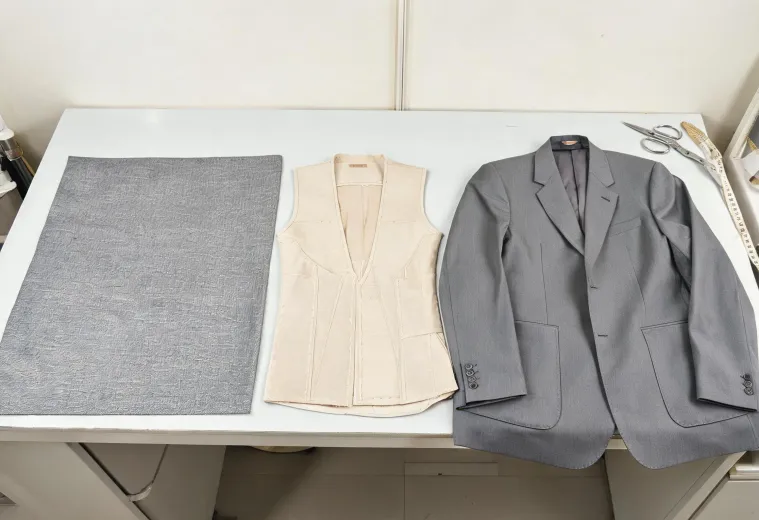
Structured Tailoring
Yarn count, weave, GSM, usable width, drape, recovery and pressing behavior need review in the intended jacket or trouser construction.

Garment applications
Structure, weight, drape, pressing, surface and care requirements change with the garment. Application context decides which sample and evidence matter.
Yarn count, weave, GSM, usable width, drape, recovery and pressing behavior need review in the intended jacket or trouser construction.

Lightweight structure, opacity, seam response, dimensional stability and care can matter more than a single abrasion figure.
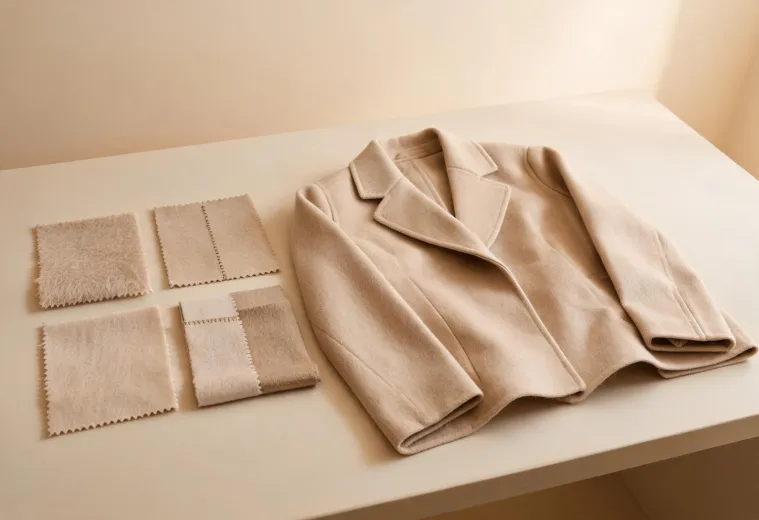
Fiber blend, loft, surface finish, GSM, pilling, abrasion, pressing and seam bulk must be balanced.
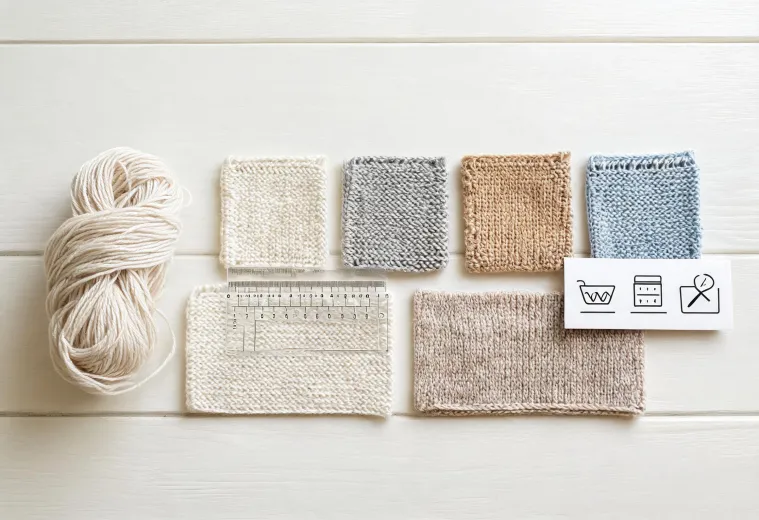
Yarn identity, count, twist, knit gauge, pilling, snagging and dimensional response require construction trials.
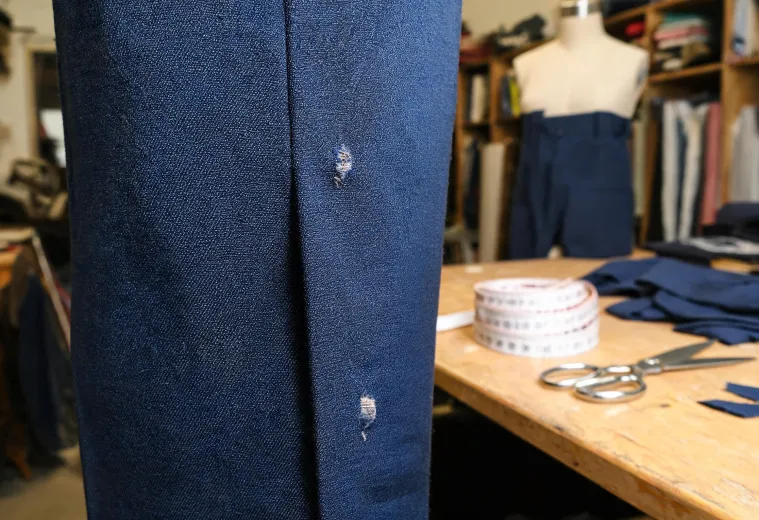
Recovery, crease, surface wear, seam strength and care are considered with weight and handfeel.
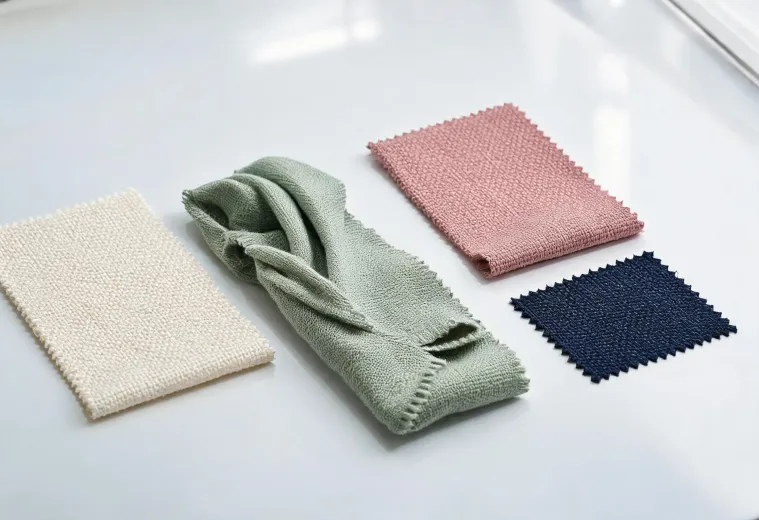
Fiber, yarn, weave, surface, colorfastness and care determine the useful sample route.
Trade-offs remain explicit: natural-fiber handfeel can bring batch variation and care sensitivity; lower GSM supports drape but may alter opacity and seam behavior; surface raising adds softness but can affect pilling and appearance; a fabric report does not replace garment validation.
Send the silhouette, construction, handfeel, shade, finish, methods and quantity.
For tailoring, include canvas, pressing and seam context; for coating, include surface finish, loft, garment bulk and care; for knit or woven accessories, include yarn or weave construction, snagging and dimensional requirements. A visually similar swatch may use a different fiber blend, yarn, finishing route or weight and should not be accepted as an equivalent without those fields.
Where test evidence is requested, identify the method, specimen and intended garment decision. Production-lot shade and finish remain separate from development approval.